Check with seller
No photo
Description
A graphics card, also called a GPU, handles graphics processing and helps your computer run visually demanding applications smoothly. Before purchasing a new GPU, you should consider your usage, monitor resolution, power supply, cabinet space, processor, and budget.
This guide explains the important factors you should check before buying a new graphics card.
Why Do You Need a New Graphics Card?
The main reason to upgrade a graphics card is to improve graphical performance. If your current GPU struggles with modern games, editing software, rendering applications, or high-resolution displays, upgrading can provide better performance.
A new graphics card can help with:
Gaming at higher resolutions and settings
Video editing and rendering
Graphic design and animation
3D modeling and rendering
AI and GPU-accelerated applications
Faster and smoother multimedia performance
Before upgrading, identify what you actually need from your graphics card. A high-end GPU may not be necessary for basic office work or casual use.
Choose a Graphics Card Based on Your Usage
Your requirements should be the first factor when selecting a GPU.
Gaming
For gaming, consider the games you play and your monitor resolution. Casual gamers may not need a powerful high-end GPU, while users playing modern AAA games at higher resolutions may require a more powerful graphics card.
For 1080p gaming, a mid-range graphics card can be suitable for many users. For 1440p and 4K gaming, a more powerful GPU is generally required.
Video Editing
Video editors can benefit from a capable GPU because many editing and rendering applications use GPU acceleration. If you regularly work with high-resolution videos, effects, transitions, and rendering, consider a graphics card with sufficient VRAM and strong processing performance.
Graphic Design and 3D Work
Designers, animators, architects, and 3D professionals may require a stronger GPU depending on their software and workload. Applications used for 3D modeling, animation, rendering, and visual effects can benefit significantly from GPU performance.
NVIDIA, AMD, or Intel: Which GPU Brand Should You Choose?
The GPU market includes major technologies from NVIDIA, AMD, and Intel.
NVIDIA
NVIDIA GeForce graphics cards are widely used for gaming, content creation, and professional applications. Different RTX and other GeForce models are available across various performance and price levels.
AMD
AMD Radeon graphics cards offer a range of options for gaming and other GPU-intensive workloads. Radeon GPUs are available in entry-level, mid-range, and high-performance categories.
Intel
Intel Arc graphics cards provide another option for users looking for modern GPU technology. Intel has expanded its graphics portfolio with dedicated Arc GPUs.
Instead of choosing a brand only because it is popular, compare the actual performance, features, VRAM, power requirements, and price of the specific models you are considering.
How Much VRAM Do You Need?
VRAM, or video memory, is an important factor when buying a new graphics card. It stores graphical data used by games and applications.
The amount of VRAM you need depends on your workload. Basic gaming and everyday graphical tasks may require less VRAM, while modern games at higher resolutions, video editing, 3D applications, and professional workloads may benefit from more.
However, more VRAM does not automatically mean that one graphics card is faster than another. You should compare the complete specifications and real-world performance.
Check Your Power Supply
One of the most important things to check before installing a new GPU is your computer's power supply unit, or PSU.
Powerful graphics cards can require significantly more power than entry-level models. Check:
PSU wattage
Required power rating of the GPU
Available power connectors
PSU quality and efficiency
Other components using power
A graphics card should not be selected without checking whether your existing power supply can support it. If necessary, upgrade the PSU before installing the new GPU.
Check Graphics Card Size and Cabinet Compatibility
Graphics cards are available in different physical sizes. Some high-performance models can be large and may require significant space inside the computer cabinet.
Before buying, check:
GPU length
GPU height
GPU thickness
Number of expansion slots
Available cabinet space
Airflow around the graphics card
Measuring your cabinet before purchasing can help prevent compatibility problems.
Match the GPU With Your Monitor
Your monitor resolution also affects the type of graphics card you should buy.
A GPU suitable for 1080p gaming may not provide the same experience at 1440p or 4K resolution. Similarly, users with high-refresh-rate monitors may want a GPU capable of delivering higher frame rates.
Think about your current monitor and whether you plan to upgrade it in the future. Choosing a GPU that matches your display can help you get better value from your purchase.
Check Processor Compatibility
Your CPU and GPU should work well together. If you install a very powerful graphics card with an older or less capable processor, the CPU may limit overall performance in certain applications or games.
This guide explains the important factors you should check before buying a new graphics card.
Why Do You Need a New Graphics Card?
The main reason to upgrade a graphics card is to improve graphical performance. If your current GPU struggles with modern games, editing software, rendering applications, or high-resolution displays, upgrading can provide better performance.
A new graphics card can help with:
Gaming at higher resolutions and settings
Video editing and rendering
Graphic design and animation
3D modeling and rendering
AI and GPU-accelerated applications
Faster and smoother multimedia performance
Before upgrading, identify what you actually need from your graphics card. A high-end GPU may not be necessary for basic office work or casual use.
Choose a Graphics Card Based on Your Usage
Your requirements should be the first factor when selecting a GPU.
Gaming
For gaming, consider the games you play and your monitor resolution. Casual gamers may not need a powerful high-end GPU, while users playing modern AAA games at higher resolutions may require a more powerful graphics card.
For 1080p gaming, a mid-range graphics card can be suitable for many users. For 1440p and 4K gaming, a more powerful GPU is generally required.
Video Editing
Video editors can benefit from a capable GPU because many editing and rendering applications use GPU acceleration. If you regularly work with high-resolution videos, effects, transitions, and rendering, consider a graphics card with sufficient VRAM and strong processing performance.
Graphic Design and 3D Work
Designers, animators, architects, and 3D professionals may require a stronger GPU depending on their software and workload. Applications used for 3D modeling, animation, rendering, and visual effects can benefit significantly from GPU performance.
NVIDIA, AMD, or Intel: Which GPU Brand Should You Choose?
The GPU market includes major technologies from NVIDIA, AMD, and Intel.
NVIDIA
NVIDIA GeForce graphics cards are widely used for gaming, content creation, and professional applications. Different RTX and other GeForce models are available across various performance and price levels.
AMD
AMD Radeon graphics cards offer a range of options for gaming and other GPU-intensive workloads. Radeon GPUs are available in entry-level, mid-range, and high-performance categories.
Intel
Intel Arc graphics cards provide another option for users looking for modern GPU technology. Intel has expanded its graphics portfolio with dedicated Arc GPUs.
Instead of choosing a brand only because it is popular, compare the actual performance, features, VRAM, power requirements, and price of the specific models you are considering.
How Much VRAM Do You Need?
VRAM, or video memory, is an important factor when buying a new graphics card. It stores graphical data used by games and applications.
The amount of VRAM you need depends on your workload. Basic gaming and everyday graphical tasks may require less VRAM, while modern games at higher resolutions, video editing, 3D applications, and professional workloads may benefit from more.
However, more VRAM does not automatically mean that one graphics card is faster than another. You should compare the complete specifications and real-world performance.
Check Your Power Supply
One of the most important things to check before installing a new GPU is your computer's power supply unit, or PSU.
Powerful graphics cards can require significantly more power than entry-level models. Check:
PSU wattage
Required power rating of the GPU
Available power connectors
PSU quality and efficiency
Other components using power
A graphics card should not be selected without checking whether your existing power supply can support it. If necessary, upgrade the PSU before installing the new GPU.
Check Graphics Card Size and Cabinet Compatibility
Graphics cards are available in different physical sizes. Some high-performance models can be large and may require significant space inside the computer cabinet.
Before buying, check:
GPU length
GPU height
GPU thickness
Number of expansion slots
Available cabinet space
Airflow around the graphics card
Measuring your cabinet before purchasing can help prevent compatibility problems.
Match the GPU With Your Monitor
Your monitor resolution also affects the type of graphics card you should buy.
A GPU suitable for 1080p gaming may not provide the same experience at 1440p or 4K resolution. Similarly, users with high-refresh-rate monitors may want a GPU capable of delivering higher frame rates.
Think about your current monitor and whether you plan to upgrade it in the future. Choosing a GPU that matches your display can help you get better value from your purchase.
Check Processor Compatibility
Your CPU and GPU should work well together. If you install a very powerful graphics card with an older or less capable processor, the CPU may limit overall performance in certain applications or games.
Details
| Views | 7 |
|---|---|
| Listing ID | #2923412 |
| Phone Number | 18005724399 |
| Website URL | https://easykartindia.com/ |
Location
Related listings
Check with seller
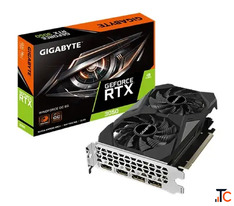
Gigabyte Rtx 3050 Windforce Oc 6Gb Gaming Graphics Card
Check with seller