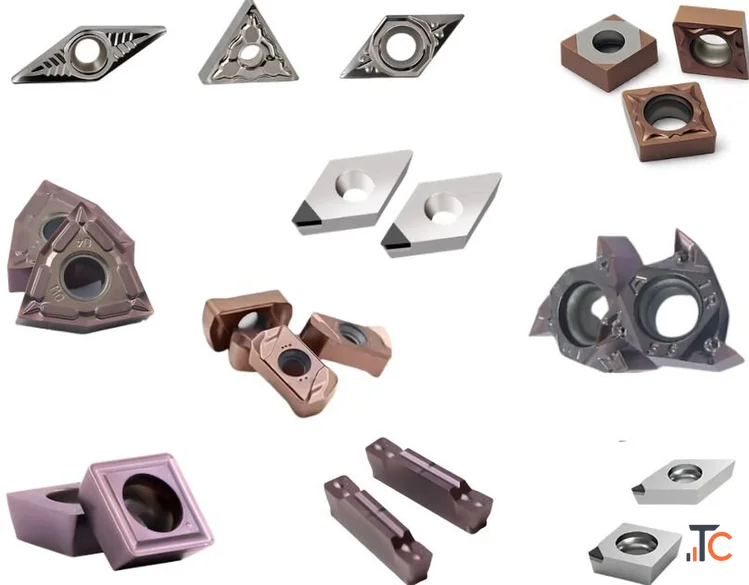
Carbide Inserts: Types, Applications and How to Choose the Right Insert for CNC Machining
4,000 ₹
Location
2nd Floor, Ali Tower, 144, Nabullah Rd, Kumbharwada, Mumbai, Maharashtra 400003, India
Mumbai, Maharashtra — India
Published
2026-11-24 12:59:41
Contact
metaldur
7039703953
Phone Number
07039703953
Website URL
Description
Carbide inserts play an important role in modern CNC machining operations, helping machining workshops and engineering industries perform turning, milling, drilling, threading and other metal-cutting applications. Selecting the right Carbide Inserts can help improve machining consistency, achieve the required surface finish and support efficient production.
Different machining operations require different insert geometries, grades and cutting-edge designs. Understanding the available types of carbide inserts helps buyers select suitable tooling according to their workpiece material and machining requirements.
Lowest price guaranteed in India without compromise in quality.
What Are Carbide Inserts?
Carbide Inserts are replaceable cutting tools used in CNC lathes, milling machines and other metal-cutting equipment. They are commonly used for machining materials such as steel, stainless steel, cast iron and non-ferrous metals.
Unlike solid cutting tools, indexable inserts can be replaced when their cutting edges become worn, reducing the need to replace the complete tool.
Different Types of Carbide Inserts for CNC Machining
Choosing the correct insert depends on the machining operation, workpiece material and required cutting conditions. The main types include:
1. Negative Turning Inserts
Negative Turning Inserts are commonly used for external and internal turning operations. Their geometries are suitable for applications requiring stable cutting conditions and multiple usable cutting edges.
2. Positive Turning Inserts
Positive Turning Inserts are designed with positive cutting geometry and are useful for applications requiring lower cutting forces, particularly in internal turning and light machining operations.
3. Milling Inserts
Milling Inserts are used in face milling, shoulder milling and other milling operations. They are selected according to cutter compatibility, workpiece material and machining requirements.
4. Drilling Inserts
Drilling Inserts are used in indexable drilling tools for producing holes in different engineering materials. Insert selection depends on drilling diameter, depth and material specifications.
5. Threading Inserts
Threading Inserts are used to produce accurate internal and external threads. Common applications include metric, unified, BSP, NPT and other thread profiles.
6. Parting & Grooving Inserts
Parting & Grooving Inserts are suitable for cutting-off, external grooving and internal grooving operations on CNC turning machines.
7. PCD Inserts
PCD Inserts are used for machining non-ferrous materials and other suitable applications where excellent surface finish and wear resistance are required.
8. CBN Inserts
CBN Inserts are suitable for machining hardened steel, cast iron, and other tough materials. They offer good wear resistance and reliable cutting performance for CNC machining.
9. Aluminium Inserts
Aluminium Inserts are designed for machining aluminium and other non-ferrous materials, including copper and brass, depending on insert grade and geometry.
10. Cermet Inserts
Cermet Inserts are used in suitable finishing and turning applications where surface finish, wear resistance and dimensional consistency are important.
How to Choose the Right Carbide Inserts?
Before purchasing Carbide Inserts, consider these important factors:
Workpiece Material: Identify whether you are machining steel, stainless steel, cast iron or aluminium.
Machining Operation: Select inserts according to turning, milling, drilling, threading or grooving requirements.
Insert Geometry: Consider chip control, cutting forces and machining stability.
Insert Grade: Choose a suitable grade according to material hardness and cutting conditions.
Machine Compatibility: Check insert dimensions, tool holder compatibility and cutting specifications.
The right insert selection helps machining workshops achieve consistent results and manage tooling requirements effectively.
Buy Carbide Inserts from Metaldur
Metaldur is a supplier of Carbide Inserts for CNC machining and industrial applications. We offer different insert categories to support turning, milling, drilling, threading and grooving requirements.
Why consider Metaldur?
Multiple carbide insert categories available.
Options for different CNC machining applications.
Suitable tooling solutions for engineering workshops and industries.
Support for dealers, distributors and bulk buyers.
Pan-India delivery support.
Competitive pricing and product availability.
Explore our Carbide Inserts range and find suitable options for your machining requirements.
Frequently Asked Questions (FAQs)
1. What are Carbide Inserts used for?
Carbide Inserts are used for turning, milling, drilling, threading, grooving and other metal-cutting operations in CNC machining.
2. What are the main types of Carbide Inserts?
Common types include negative turning, positive turning, milling, drilling, threading, parting and grooving, PCD, aluminium and cermet inserts.
3. How do I select the right Carbide Inserts?
Consider the workpiece material, machining operation, insert geometry, grade, cutting conditions and tool holder compatibility.
4. Are Carbide Inserts suitable for CNC lathes?
Yes. Different carbide insert types are available for CNC lathe operations, including external turning, internal turning, threading and grooving.
5. Where can I buy Carbide Inserts in India?
You can explore different carbide insert categories from Metaldur and contact the team for product ava