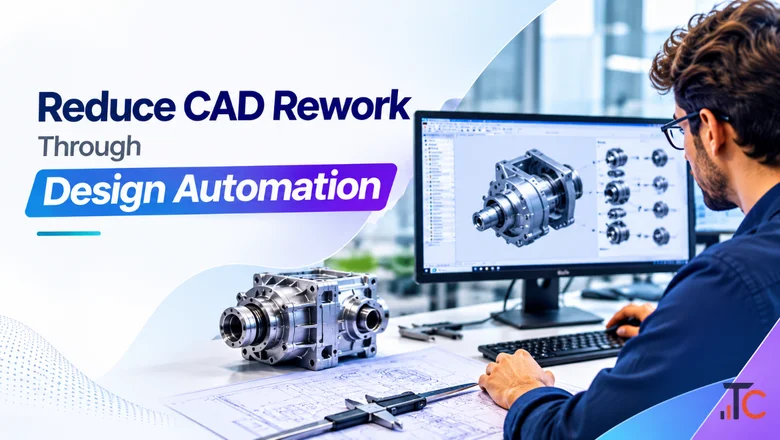
How Engineering Teams Can Reduce CAD Rework Through Design Automation
Free
Location
5975 Shiloh Rd, Suite 114, Alpharetta, GA 30005
Hyderabad, Telangana — India
Hyderabad, Telangana — India
Published
2026-11-17 16:53:04
Contact
Jaydu LLC
9437773905
9437773905
Phone Number
9437773905
Website URL
Description
How Engineering Teams Can Reduce CAD Rework Through Design Automation
Engineering teams often face recurring design rework as products become more complex and development schedules become tighter. A small change to a dimension, component, or configuration can require updates across CAD models, drawings, bills of materials, and manufacturing documentation.
When these changes rely heavily on manual effort, the risk of inconsistencies increases. Engineers may spend valuable time correcting repetitive tasks instead of focusing on design decisions, product performance, and technical challenges.
## Why Rework Happens in Engineering Design
Repeated design corrections are often connected to workflows that depend on manual updates, inconsistent modeling practices, and limited validation.
For example, a manufacturer developing several product variants may need to update similar components for each configuration. If those models are recreated or modified independently, differences can emerge between designs that should follow the same engineering rules.
A missed parameter or outdated drawing reference can lead to additional reviews, manufacturing questions, and avoidable delays.
## Standardize Repetitive Design Activities
A practical starting point is to identify engineering tasks that follow predictable rules.
These may include recurring drawing layouts, standard component features, frequently used design configurations, and routine model validation checks.
Documenting these rules helps engineering teams establish consistent practices and identify which activities can be automated without compromising engineering judgment.
## Where CAD Automation Can Help
CAD automation can support repetitive modeling operations, parameter updates, drawing generation, and routine validation.
For example, a manufacturer producing configurable equipment may use approved parameters to generate related models. Rather than rebuilding each variation manually, engineers can work from a controlled design framework.
Depending on the CAD environment, automation may involve macros, application APIs, configurable templates, or rule-based workflows.
Knowledge Based Engineering (KBE) can also capture design knowledge and engineering rules in reusable processes. This helps teams apply established standards more consistently across product families.
## Control Changes Across Engineering Deliverables
A CAD model is only one part of an engineering release. Drawings, bills of materials, inspection requirements, and supplier documentation may also depend on the same design information.
Teams should establish how significant changes affect these deliverables. Revision tracking, controlled release procedures, and automated checks can help identify missing updates before the design reaches manufacturing.
Automation should support this process, not replace technical review. Outputs still need validation, especially when changes affect product performance, safety, or manufacturing requirements.
## Measure the Results
Engineering teams can evaluate improvements by tracking drawing preparation time, repeated corrections, errors identified during design reviews, and documentation mismatches.
Establishing a baseline before implementation makes it easier to determine whether an automated workflow is creating measurable value.
Start with a manageable task, validate the results, and expand the approach when the benefits are clear.
## Make Design Work More Repeatable
Reducing CAD rework requires more than adopting a new tool. It involves clear engineering rules, controlled changes, reliable validation, and a practical understanding of where manual effort creates unnecessary risk.
Jaydu LLC provides engineering and R&D services, including [design automation solutions](https://jaydu.com/design-automation/) that support CAD automation, API development, and Knowledge Based Engineering.
For manufacturers dealing with recurring design changes and growing product complexity, the long-term objective is to make routine work more repeatable while keeping engineering judgment at the center of every important decision.