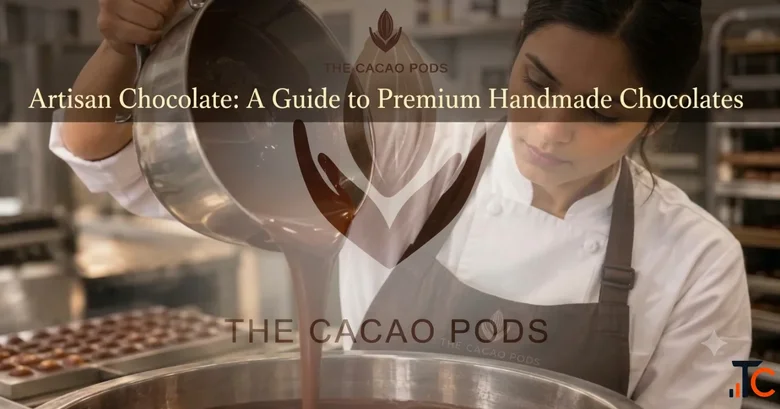
Artisan Chocolate A Guide to Premium Handmade Chocolates
750 ₹
Location
DELHI, Delhi — India
Published
2026-10-09 13:01:06
Contact
thecacaopods
Phone Number
+91 92206 11005
Website URL
Description
Artisan Chocolate: A Guide to Premium Handmade Chocolates
Think of the last time a chocolate truly stopped you mid-bite. It probably didn’t taste like the waxy, overly sweet bars from the supermarket checkout. It likely tasted of roasted nuts, red berries, or caramel.
That is the world of artisan chocolate. This guide to premium handmade chocolates answers the questions people ask most, so you can buy, taste, and enjoy with confidence.
What Is Artisan Chocolate?
Artisan chocolate is chocolate made in small batches by skilled makers who control the process, from selecting cocoa beans to the final mould. Unlike mass-produced chocolate, it prioritises flavour, quality ingredients, and craftsmanship over volume and low cost.
Typical traits include:
Small-batch production
Short, recognisable ingredient lists
Careful sourcing of cocoa beans
Hand-finished details such as hand-poured moulds, hand-dipped centres, or hand-decorated tops
How Is Artisan Chocolate Different from Regular Chocolate?
The differences show up in the ingredients, the process, and the taste.
Feature
Artisan Chocolate
Mass-Market Chocolate
Batch size
Small
Industrial scale
Cocoa quality
Often single-origin, fine-flavour beans
Blended, bulk beans
Ingredients
Cocoa, cocoa butter, sugar (sometimes milk, vanilla)
Often adds vegetable fats, emulsifiers, artificial flavours
Flavour
Complex, varied, terroir-driven
Uniform, sweet
Many mass-market bars rely on heavy sugar and added fats. Premium makers let the cocoa itself take centre stage.
What Does “Bean-to-Bar” Mean?
Bean-to-bar chocolate means the maker handles every step in-house: sorting, roasting, cracking, grinding, conning, tempering, and moulding the beans into finished chocolate.
This matters because roasting and grinding choices shape the final flavour. A maker who controls the whole process can bring out fruity, nutty, floral, or earthy notes on purpose.
Not all artisan chocolatiers are bean-to-bar. Some buy high-quality couverture (professional-grade chocolate) and transform it into truffles, bonbons, and filled chocolates. Both approaches can produce excellent handmade chocolates. The difference is where the craft is focused.
What Ingredients Should You Look For?
A good rule: shorter is usually better.
Look for:
Cocoa beans or cocoa mass listed first (for dark chocolate)
Cocoa butter (not substitute fats)
Natural vanilla or real fruit, nuts, and spices
Clear origin information, such as country, region, or estate
Be cautious of:
Palm oil or “vegetable fat” in place of cocoa butter
Artificial flavours
Vague labels like “cocoa solids” with no percentage
What Is Single-Origin Chocolate?
Single-origin chocolate is made from beans grown in one specific country, region, or estate. Just as wine reflects its vineyard, cocoa reflects its soil, climate, and fermentation methods.
Examples of flavour tendencies (they vary by producer and harvest):
Madagascar: bright, red-fruit acidity
Ecuador: floral, nutty notes
Ghana: classic, deep chocolatey richness
Venezuela: balanced, often with nutty or caramel tones
Cocoa is generally grouped into three varieties: Criollo (rare and delicate), Trinitario (a hybrid), and Forastero (the most widely grown). Many fine-flavour makers focus on Criollo and Trinitario, though good Forastero exists too.
What Does the Cocoa Percentage Really Tell You?
The percentage shows how much of the bar, by weight, comes from cocoa beans (cocoa solids plus cocoa butter). It does not guarantee quality.
30–45%: typical milk chocolate; creamy and sweet
55–70%: balanced dark chocolate; a good starting point
70–85%: intense, less sweet, more pronounced bitterness
85%+: very strong; best for seasoned dark chocolate fans
A well-made 65% bar can taste far better than a poorly made 90% bar. Fermentation, roasting, and the quality of the beans matter just as much as the number.
How Do You Taste Premium Handmade Chocolates Properly?
Slow down and use your senses. Here is a simple five-step method:
Look: Good chocolate has a glossy, even surface without white streaks.
Snap: Break a piece. A clean, crisp snap suggests proper tempering.
Smell: Rub it briefly with your thumb and inhale for aromas.
Melt: Let a small piece dissolve on your tongue rather than chewing right away.
Reflect: Note the flavours at the start, middle, and finish.
You may notice notes of coffee, dried fruit, spice, or honey. There are no wrong answers.
How Should You Store Artisan Chocolate?
Proper storage protects flavour and texture.
Ideal temperature: around 15–18°C (59–64°F)
Avoid: direct sunlight, strong-smelling foods, and humidity
Refrigeration: generally not recommended for plain chocolate, as condensation can cause sugar bloom. Filled chocolates with fresh cream may need cooler storage, so follow the maker’s guidance.
Wrap it: keep opened bars in an airtight container or foil
In hot climates like much of India, keep chocolate in the coolest, driest part of your home, and let it come back to room temperature slowly if you chill it.
Is Artisan Chocolate Worth the Price?
Usually, yes, if you value flavour and ethics. Higher prices reflect:
Better-quality, often fairly sourced cocoa
Small-batch labour and skill
Premium ingredients without cheap fillers
Dark chocolate with a high cocoa content also contains flavanols and minerals such as magnesium and iron. It is still a treat, so enjoy it in moderation. A small piece of intensely flavoured chocolate often satisfies more than a large piece of ordinar