Why MEP Clash Detection Belongs Early in Your BIM Workflow
Check with seller
Location
Hi-Tech House, Near Gurukul Tower, Gurukul Road
Ahmedabad, Gujarat — India
Ahmedabad, Gujarat — India
Published
2026-10-02 19:20:13
Contact
Hitech BIM Services
7940003252
7940003252
Description
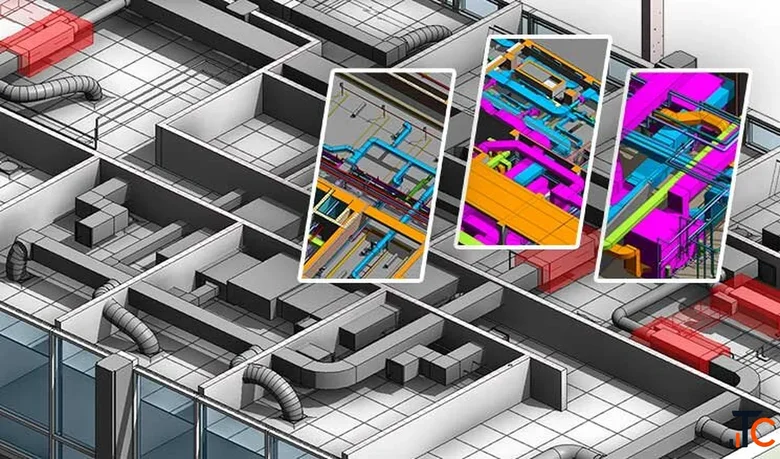
Most rework on MEP projects doesn't happen because someone modeled something wrong — it happens because nobody checked how the pieces fit together before fabrication started. That's the gap MEP clash detection is meant to close, and it's a core part of the MEP BIM services Hitech BIM Services offers to contractors and consultants working on mechanical, electrical, and plumbing systems.
The process itself is fairly straightforward on paper: build the 3D MEP model in Revit, run it against the architectural and structural models in Navisworks, and flag every point where a duct, pipe, conduit, or cable tray physically collides with something else in the building. In practice, though, it takes a team that actually understands MEP systems to interpret those clashes correctly and resolve them without creating new problems elsewhere in the layout. That's where Hitech's in-house engineers and AutoCAD drafters come in — they're not just running software, they're making coordination decisions that hold up once the drawings reach the field.
Once clashes are identified and resolved, the output isn't just a cleaner 3D model. The team also produces 2D coordination drawings and shop drawings that sheet metal contractors and installers can use directly, along with fabrication drawings where needed. So the clash detection work actually feeds into something usable on site, rather than staying stuck in a model file that nobody on the ground looks at.
This kind of MEP coordination has been applied across a fairly broad mix of building types — hospitals, resorts, residential and commercial developments, shopping malls, and industrial complexes among them. That variety matters because a hospital's MEP density and code requirements are nothing like a retail complex's, and clash detection that works for one doesn't automatically translate to the other without real MEP knowledge behind it.
Hitech has also worked with MEP consultants and general contractors across the USA, UK, Europe, and the Middle East, which means the team has had to adapt to different regional standards and documentation expectations rather than applying one fixed template everywhere. For firms bringing on outsourced MEP modeling support, that kind of exposure tends to shorten the learning curve on new projects.
If clash detection currently happens late in your process — or worse, after fabrication — it's worth rethinking where it sits in the workflow. Catching a duct-versus-beam conflict in a coordinated 3D model costs a revision. Catching it on site costs a delay, a site visit, and sometimes a redo of work that's already installed.
Hitech BIM Services builds this clash detection and coordination work into their MEP BIM services from the start, using Navisworks to check every discipline against every other before anything moves to fabrication. If you're managing a project where MEP coordination has been a recurring headache, it's worth discussing your specific layout and requirements with their team directly.