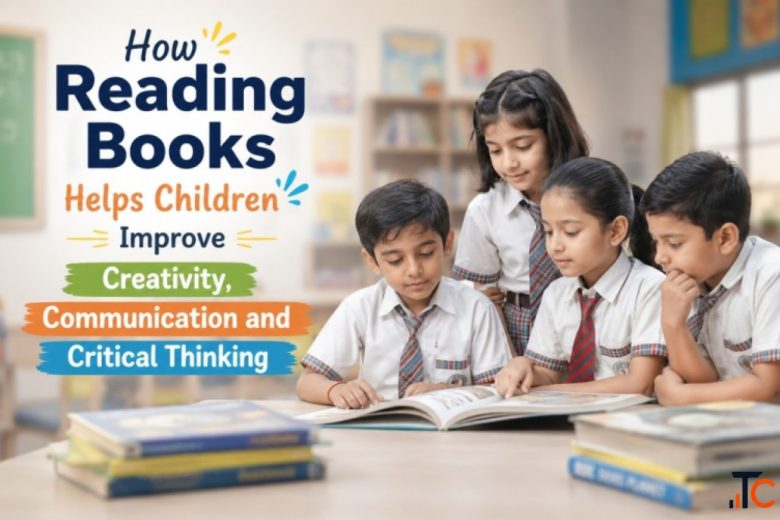
How Reading Books Helps Children Improve Creativity Communication and Critical Thinking
1,22,052 ₹
Location
Sector 1, IMT Manesar (Gurgaon) Haryana –122052
Gurgaon, Haryana — India
Gurgaon, Haryana — India
Published
2026-08-24 17:35:23
Contact
Ompee Global School
09953350151
09953350151
Phone Number
09953350151
Website URL
Description
How Reading Books Helps Children Improve Creativity, Communication and Critical Thinking
In a world where children spend increasing amounts of time on screens, developing a regular book reading habit can make a meaningful difference. Reading is not just an academic activity; it helps children understand ideas, express themselves, ask questions and see the world from different perspectives.
For growing minds, books can become a simple yet powerful tool for developing creativity, communication skills and critical thinking.
How Does Reading Improve Creativity?
Books take children beyond what they already know. Stories, characters and imaginary worlds encourage children to visualise situations and create their own ideas. Whether reading a story, discovering a new place or learning about a different culture, children use their imagination to connect words with pictures and experiences.
Regular reading can therefore encourage curiosity and help children think creatively rather than simply memorising information.
How Reading Builds Communication Skills
Children naturally pick up new words, expressions and sentence structures while reading. This gradually improves their vocabulary and helps them communicate their thoughts more clearly.
Reading stories also gives children something to talk about. Discussing a character, explaining a story or sharing an opinion helps them become more confident speakers and active listeners.
How Books Develop Critical Thinking
Good books often make children wonder, “Why did this happen?”, “What would I do?” or “Could there be another solution?” Such questions encourage children to analyse information, compare different viewpoints and form their own opinions.
This ability to question, evaluate and think independently is an important part of critical thinking and lifelong learning.
Making Reading a Daily Habit
Parents can make reading enjoyable by allowing children to choose age-appropriate books based on their interests. Even 15–20 minutes of reading every day can help create a positive routine. Parents can also ask simple questions about the story and encourage children to share their thoughts.
At Ompee Global School, learning goes beyond textbooks. The school focuses on curiosity, creativity, communication and critical thinking as part of a child's holistic development. Reading can complement this approach by encouraging children to become confident, curious and independent learners.
Frequently Asked Questions
Why is reading important for children?
Reading helps children improve vocabulary, imagination, communication, concentration and critical thinking.
How does reading improve creativity?
Stories encourage children to imagine new situations, characters and possibilities, helping them develop creative thinking.
Does reading improve communication skills?
Yes. Regular reading introduces children to new vocabulary and language patterns, helping them express their ideas more confidently.
How does reading develop critical thinking?
Books encourage children to ask questions, understand different perspectives, analyse situations and form their own opinions.
How can parents develop a reading habit in children?
Start with books that match the child's interests and set aside a short, enjoyable reading time every day.
Conclusion
Reading is more than a way to learn new words—it helps children imagine, communicate, question and think independently. A regular book reading habit can strengthen creativity, improve communication skills and develop critical thinking from an early age. With the right books and encouragement from parents and teachers, reading can become an enjoyable part of a child’s daily life and support their overall growth, confidence and lifelong love for learning.